Mentoring
Do you want to create a better world? Then stop lying
I have a friend and colleague in natural therapies who says that telling lies is a symptom of suffering from a mild form of schizophrenia, because you live in a dual reality: that of the Truth and the one you invented with your lies. Is that so?
Somewhere I discovered another theory that people who are used to lying even suffer a distortion in their facial features, which are skewed to the right. I haven’t checked this out yet, so if you do, please let me know.
I hate telling lies myself, especially because I have an excellent memory and I’d have to constantly check to see if I could match my lies with reality. It’s not even worth starting.
Recently, a loud neologism called fake news appeared, the meaning of which seems to me to be too complex and which I suspect no one really knows what it is, as we have been living in such a dizziness of Anglicisms and cultural ignorance that they only create more confusion.
So let’s stick with our old, trusted words: lies and the truth.
So if you want to improve the world, avoid telling lies or using misleading terms. Let’s force ourselves to use terms with a clear meaning, because confusion and misinterpretation are disastrous. No words or expressions with double meanings and the like.
We’re not Quim Barreiros or Herman José making jokes in layers…
And so, instead of telling lies, apologize and simply say that you’d rather avoid such a question.
This subject is inexhaustible and fascinates me, but we have to stop here.
Tell me about your doubts and other issues you’d like to see addressed here. Yes?
A kiss from Grandma Maria.
From being kind
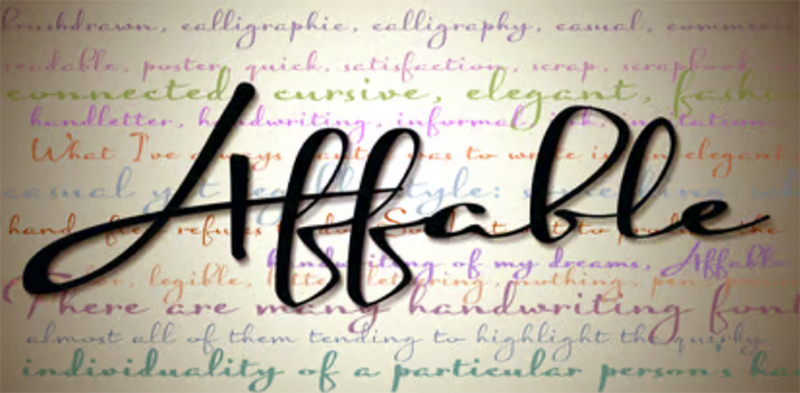
Friendliness is one of the best social lubricants. Relationships become smooth if they take place between affable people. It has some synonyms that are worth remembering, such as delicacy of treatment, courtesy, straightforwardness or affectionate.
An affable person is like a polished piece of wood that your hand glides over, and this is exactly the term that is most used in a good number of other languages. On the other hand, unpolished people are abrasive and with them socializing becomes abrasive, they hurt everyone they come into contact with.
Let’s just say that abrasives are painful to live with, they’re like sandpaper that rips the skin off anyone who touches it without taking care. Let’s say that abrasives are “fucked up” and they fuck up everyone they come into contact with. So let’s avoid contact with sandpaper people so we don’t get sanded.
Fortunately, Portuguese is an extremely rich language that allows us to express our ideas fully.
This subject is inexhaustible and fascinates me, but we have to stop here.
Tell me about your doubts and other issues you’d like to see addressed here. Yes?
A kiss from Grandma Maria.
Old Money or New Money and how to tell them apart
These terms have been on many people’s lips lately, but in a way that’s too superficial for my taste. They treat it as if it were just a fashion trend, but it’s not.
Of course, everything can be treated with the greatest superficiality or in depth.
From the studies I’ve done, theOld Money attitude has a very different origin from that of New Money. The latter comes from the mentality of the hunter, while Old Money comes from that of the farmer.
The mentality of the hunter is one of aggression and the daring to live almost without a past or a future, because wherever he goes he catches whatever prey there is and uses his feathers, ivory or fur to decorate himself, showing everyone how successful he is in taking advantage of the opportunities that come his way. In centuries gone by, we had both the hunter and the fisherman, but also the pirate or the thief or the cocotte, in the Paris of the Belle Epoque, proudly displaying all the trophies he had taken from his latest prey.
The farmer’s mentality also included courage and aggression, but tempered with a great deal of prudence, as he felt an enormous responsibility towards his community. The community was very large, containing his extended blood family, plus the adopted family of those who were raised as family members, plus a legion of servants and temporary workers. The leader’s responsibility was enormous because he had to (like a father = boss and the like) feed and clothe so many people, help them organize their lives, preserve the crops and seeds from one year to the next and so much more. Of course, the farmer also hunts down the opportunities that life offers him, but he lives very thoughtfully with his meager habits.

This also includes the duty to preserve the functional heritage for the next generation who will inherit it.
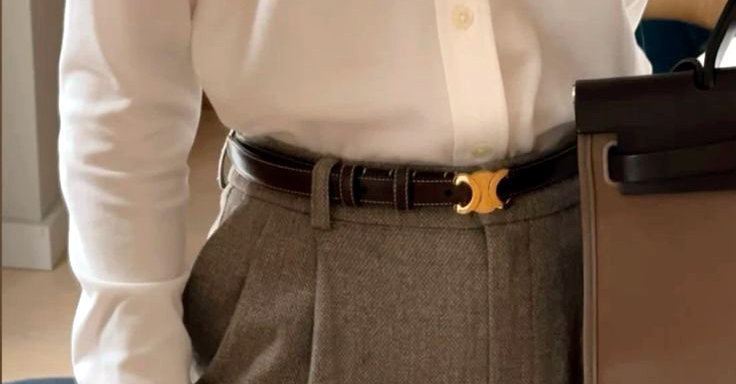
Even Old Money clothes have such a uniform style because when you buy such high quality pieces they need to have a timeless style, as they too will be inherited.
During the 20th century, a princess lost her husband in a terrible accident and his beautiful Italian suits turned up years later, worn by their children when they were old enough and big enough to wear them. Another case was a great Italian industrialist who for decades had been considered the most elegant man in the world and whose closet was inherited by one of his nephews (the one with the most similar measurements and who obviously looked the best) who soon became another of the “most elegant men” with ease.
This subject is endless and fascinates me, but we must stop here.
Tell me about your doubts and other issues you’d like to see addressed here. Yes?
A kiss from Grandma Maria.